Friday, November 18, 2011

A Hike Through Leonard Springs Nature Park

After eating at El Ranchero,
I headed out to a little known and out of the way
city park.
Oddly, this city park is actually outside the city limits,
but given the nature of the park (no pun intended),
that is to be expected.


If you don't know where this park is,
you would be hard pressed to find it.
Even if you know where it is,
it is easy to miss it.
The parking lot only has room for about eight cars
so they actually recommend that you 
don't go there on weekends.
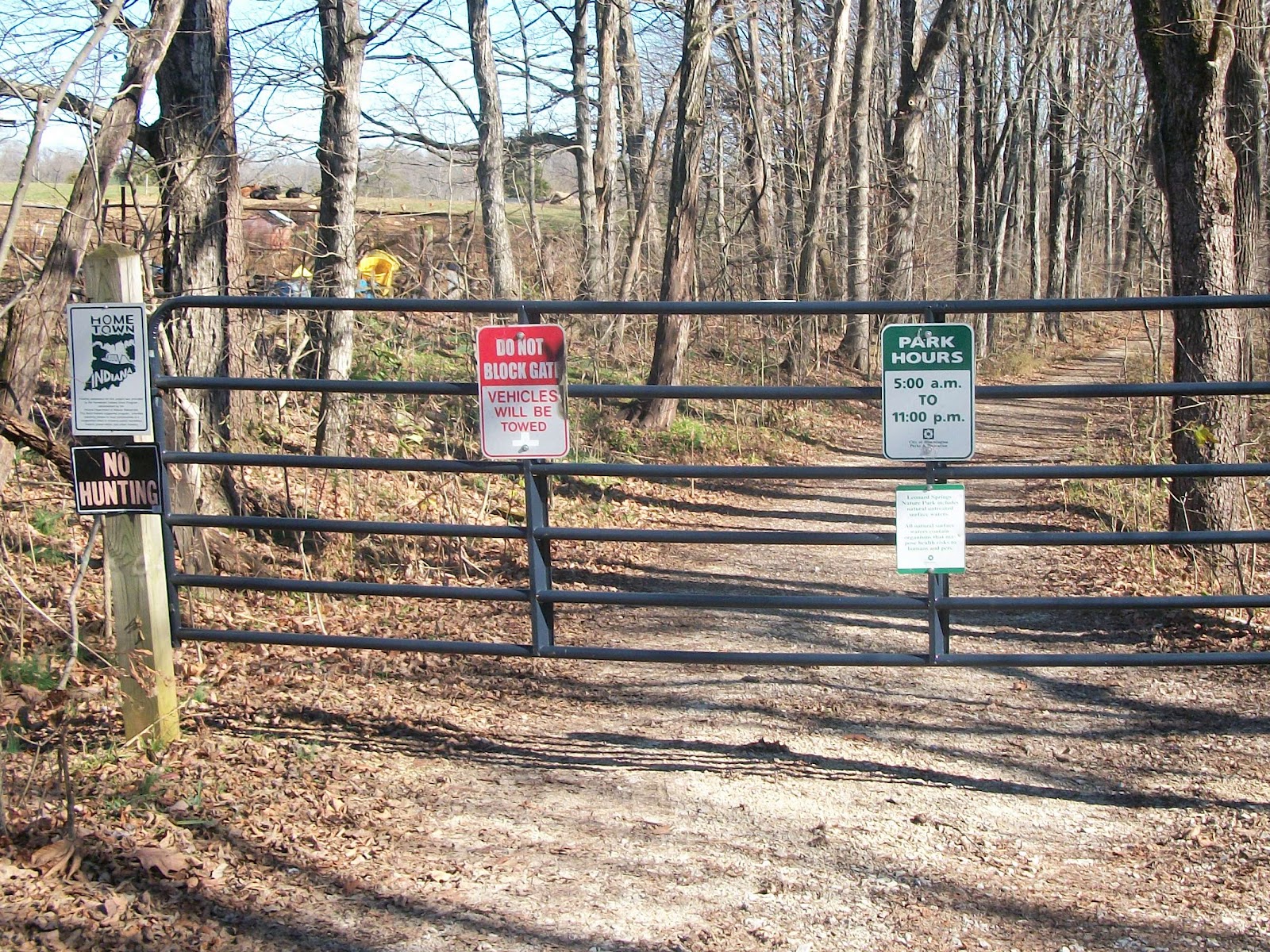


As the web site warned that this was a rugged one mile hike,
I took my asthma medicine before heading out.

I learned my lesson after my last hike at McCormick's Creek.


The property contains Leonard Springs and Shirley Springs.  There are also two caves, which are closed to hikers due to the threat of White-nose syndrome, a fungal sickness that is killing bats.  

The City of Bloomington purchased the property between 1914 and 1917 in order to build a reservoir which would store water for municipal use. By 1943, the City was receiving water from other sources. The lake was drained, and the property was not used. In 1998, Bloomington Parks and Recreation purchased the property from Bloomington Utilities Service Board. Leonard Springs Nature Preserve was dedicated on October 18, 1999.


At the top ridge of the canyon.

I will be descending one hundred feet to the bottom.


Stairs!
I do not think these are natural.

92 of these wind their way down to the springs.


Shirley Springs Shelter Cave. 


You can look but you can't go in.


More steps to go.


Looking up.


Way up.


The springs.


This is just lovely.


A massive tree fell.


Looking at the bottom of the root ball of the tree.


Mushrooms and plants growing on the fallen tree.


Looking across the canyon.


A bridge across the creek.


Looking downstream.


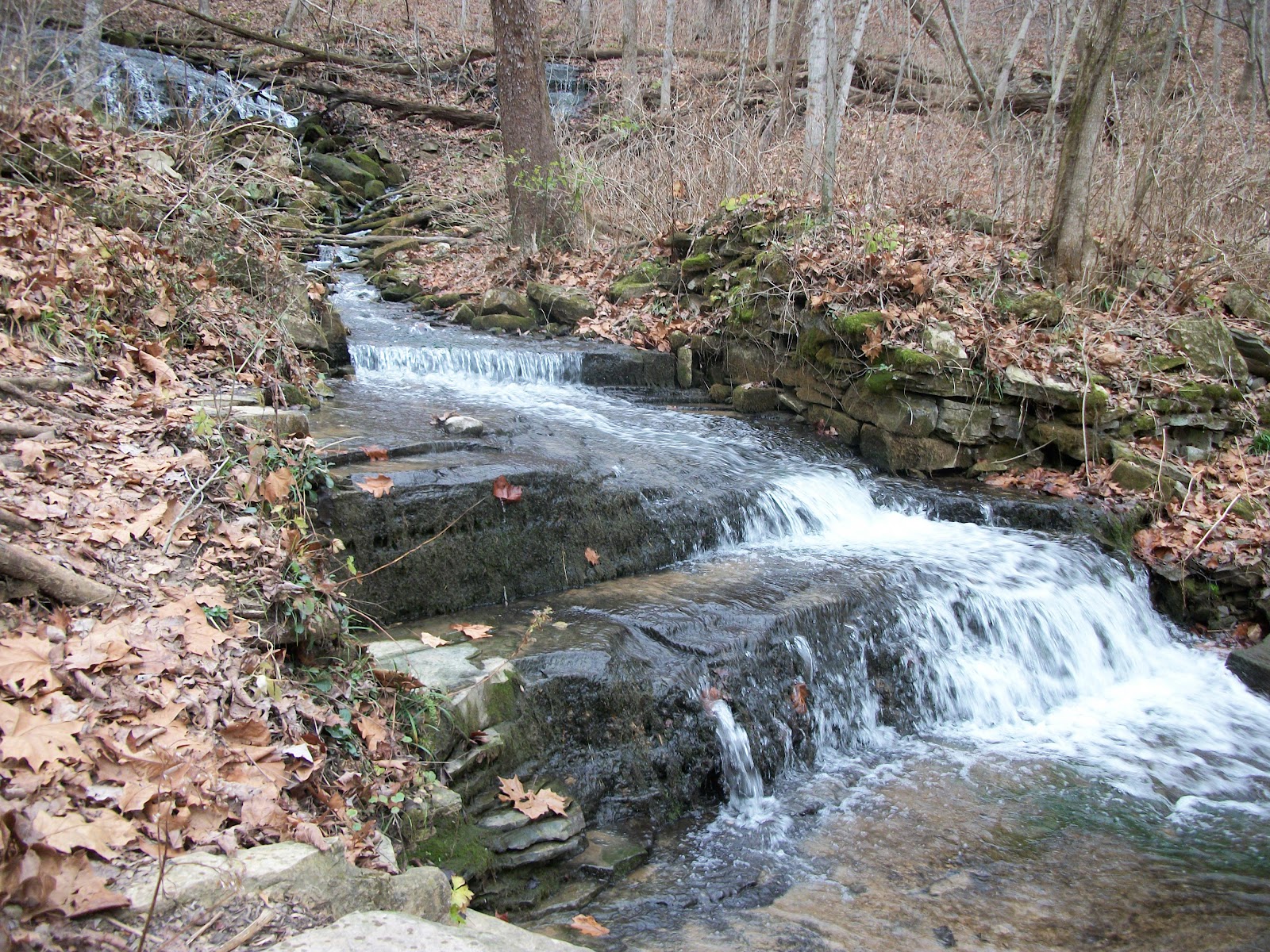
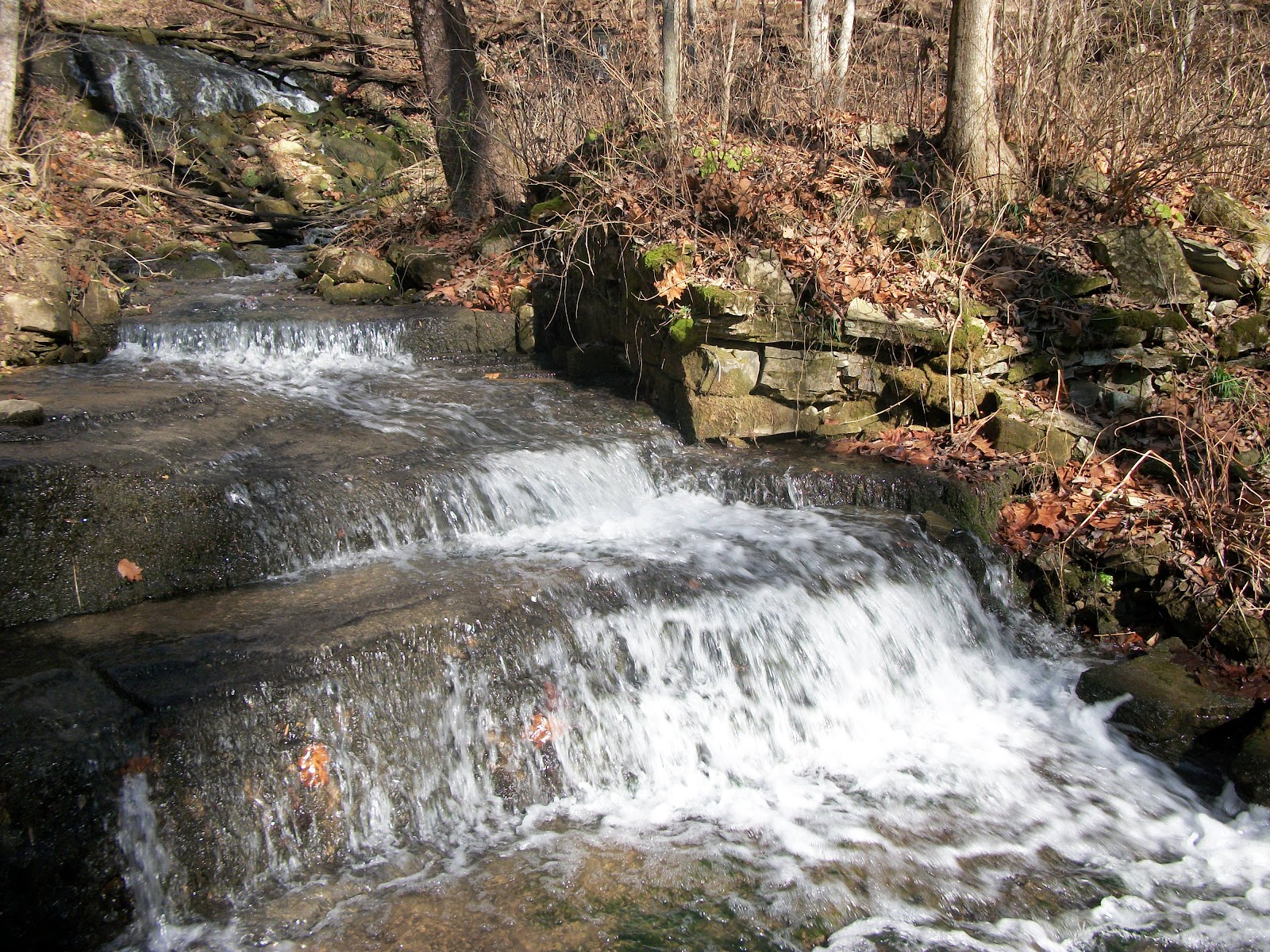
Looking upstream at the falls.


Interesting tree "sculpture".
I'd like to take this home.


The remains of the lake.


Birth of a Wetland
A reservoir once filled this valley.  From 1915 to 1943, a basin was dammed as a water supply for Bloomington.  Since that time, trees have returned to the slopes and a wetland has become established in an area that was formerly a muddy flat.  Although altered, Leonard Springs now supports a variety of plant and animal species.

Wetland Benefits: 
Keeping your water clean
Some wetland plants absorb pollutants while others provide habitat for bacteria that convert bacteria into a safer form

Stopping floods
After a rain, water from the surrounding area drains into Leonard Springs.  Like a sponge, excess water is held and slowly released.  In this way, wetlands prevent downstream flooding.

Wetlands and wildlife
Wetlands provide habitat for wildlife.  Migratory waterfowl, beaver and frogs are dependent on wetlands.

Wetlands aren't wastelands
Wetlands are a valuable ecosystem.  Wetland plants act like a sponge, soaking up floodwaters, pollutants and silt.  Water leaves wetlands cleaner than it was when it entered.


The area is allowed to remain natural.

That means that fallen and decaying trees
are left alone and not cleaned up.


Leonard Springs Reservoir: 1915 - 1943
You are standing on the remains of the Leonard Springs Dam.

Demand exceeds supply
By the late 1800s it became obvious that wells could not supply enough water to the growing city of Bloomington.  From 1915 to 1943, the Leonard Springs Reservoir served this purpose.

Water and politics
Since limestone bedrock does not hold water, the Leonard Springs Reservoir was plagued by shortages.  Indiana University had to ship water by train and considered moving out of Bloomington.  Heated battles developed between Mayor John Harris who wanted to expand Leonard Springs, and Indiana University who wanted to move the waterworks to Griffy Creek.  After years of stalling, Harris was overruled.  In 1924, Griffy Reservoir was established.

The end of the reservoir
Located on impervious siltstone, Griffy holds water.  Leonard Springs was maintained as a water supply until being abandoned in the 1940s.  Shortly after, the dam breached during high water.  The property was conveyed to the Bloomington Parks and Recreation Department from the City of Bloomington in 1998.


The view of the the wetlands from the dam.


Looking along the old dam.


Continuing along the trail.


Fossils on limestone.


I've come full circle.


And I finally found the second cave.


Years ago the two caves were connected,
but a cave-in separated the two.


Two days later
I returned with the Foodie Daughter.

I wanted more pictures of the falls.
Unfortunately, rain was threatening.


The falls as seen through a hole in the fallen tree.
Thanks to the Foodie Daughter for this inspiration.

It started to rain so we headed back to the car.
Up the hill and up 92 steps.
It was much easier to take the long way around
the other day.

I just don't know why it took me so long to discover this
hidden gem.

Now that I have found it,
I will be back.
I can't wait to explore this natural wonder
in the different seasons.

Thursday, November 17, 2011

Lunch at El Ranchero

I decided to treat myself after my
bi-weekly massage and headed to a
restaurant that has been on my "to-try" list:
El Ranchero.

Mexican cuisine is a bit out of the way
in my world culinary tour,
but I was on the "wrong side of town"
after all.

Since this was my treat to myself because
of a month-long migraine
and this was a stopping point
before a special mini trip,
I could do what I wanted.
So there.


I was promptly seated in the expansive dining room.

There were quite a few diners present,
but this was a large place, so it didn't feel crowded.


The menu.


Having perused the menu online
before I arrived,
I already knew that I wanted the Carnitas.


A shot of the dining room.


I asked for a glass of ice water with lemon on the side.

Look, Rosie!
Four slices of lemon!


After taking my order,
the server brought out this large basket of warm
tortilla chips and the carafe of salsa.

Now, how am I going to eat all of these delicious chips by
myself?
Well, I tried.
They were very good.
Although I prefer pico de gallo over salsa.


The Carnitas arrived.
This is a plate of pork tips served with rice, refried beans,
guacamole salad and a side order of warmed flour tortillas.


Don't let the large hunks of pork fool you,
they were fork tender.

Carnitas are typically cut from the "Boston butt" or shoulder
of the pork and are slow roasted for several hours
until the collagen is broken down.


I bundled the various ingredients into the flour tortillas
and rolled them up.
I also simply ate components of the dish 
as they were.

Quite delicious.
Not spicy at all but this had some very nice flavors.

Not bad for $6.99.


Now that I was fed it was time to head off for my
adventure,
despite the fact that the wind chills
were in the low 30's.

Next up, a rugged hike through a beautiful
Southern Indiana nature park.

Monday, November 14, 2011

Time to Winterize the Plants

I really hate this time of year.

It's the time of year when I have to bring
all the cold-sensitive plants inside for the season.

At this point, I've already brought in the houseplants.
But I've resisted bringing in the bay tree and the
rosemary plant as long as I can.

These herbs are among the more expensive herbs
and they are also rather cold-sensitive.

Bay laurel trees are native to the Mediterranean region
and cannot survive temperatures below 20 degrees.

In optimum conditions these trees could grow
to be 60 feet tall.

However, in Southern Indiana, they must be grown in pots
and brought inside in the winter.

The only major pest
which I have witnessed, is scale.
Treat with insecticidal oil, or simple remove by hand.


The bay tree has been very happy this year
and has grown to be almost five feet this season.

That is an increase of about 100% in one season.

I am happy to report that the scale infestation has
been eliminated as well.

Petunias have taken up residence in the pot.
Free loaders.


The great room has turned into a nursery.

The Foodie Boyfriend says that it looks like
"a jungle threw up in here."
Considering that I have to keep vacuuming
up the fallen leaves and the flower petals off the floor,
I'd have to agree with him.

Now I just have to keep the bay tree and the 
rosemary alive until spring.

Rosemary is always the problem 
as it doesn't like the dry climate of the house
no matter how often or how little I water it.
Rosemary is also a native to 
the Mediterranean basin.

While it thrives outside with relative ease,
rosemary struggles in an indoor environment.
And since rosemary cannot usually 
survive temperatures dipping below 30 degrees,
one must bring the plant indoors 
in order to keep it alive.

Let the plant dry out before watering
and keep an eye out for aphids, spider mites 
and powdery mildew.

In other words,
good luck.


Tuesday, November 8, 2011

A Trip Back in the History of Laundry

I admit it, I have a weakness for antique stores.

For one thing, one never knows what one will find
in them.
It's like a treasure hunt each and every time.
For another thing, 
it is history, pure and simple.
I am torn between which of the two is the more compelling.

 At any rate, 
I recently came upon an item at my favorite
antique store in town that spoke to me.

It found a place of honor in the laundry room.


The only thing I did to this antique scrub board 
was to treat the wood with mineral oil.*

That brought out the words 
"Home Aide" on the front.


The words on the back of the board are:
"Ideal for silks, hosiery and lingerie
or handkerchiefs

"Just the right size to fit a bucket,
pail or lavatory

"Packs easily into suit case 
or traveling bag**

"Columbus Washboard Co., Columbus, Ohio"

**I wonder what TSA would think 
about finding a washboard in a carry-on bag.

"It's for washing my silks, hosiery and lingerie. Really."

"Sure, it is.  Step over here for a full body pat down."

* I waffled about doing anything at all to this 
washboard as it is an antique, but in the end,
I decided that the need for preserving the wood
and the clarity of the written words
was greater than the need for being "authentic".

Sometimes it's okay to touch-up a good antique.
Just make sure that you aren't harming the value by doing so.