A Hike Through Leonard Springs Nature Park
After eating at El Ranchero,
I headed out to a little known and out of the way
city park.
Oddly, this city park is actually outside the city limits,
but given the nature of the park (no pun intended),
that is to be expected.
If you don't know where this park is,
you would be hard pressed to find it.
Even if you know where it is,
it is easy to miss it.
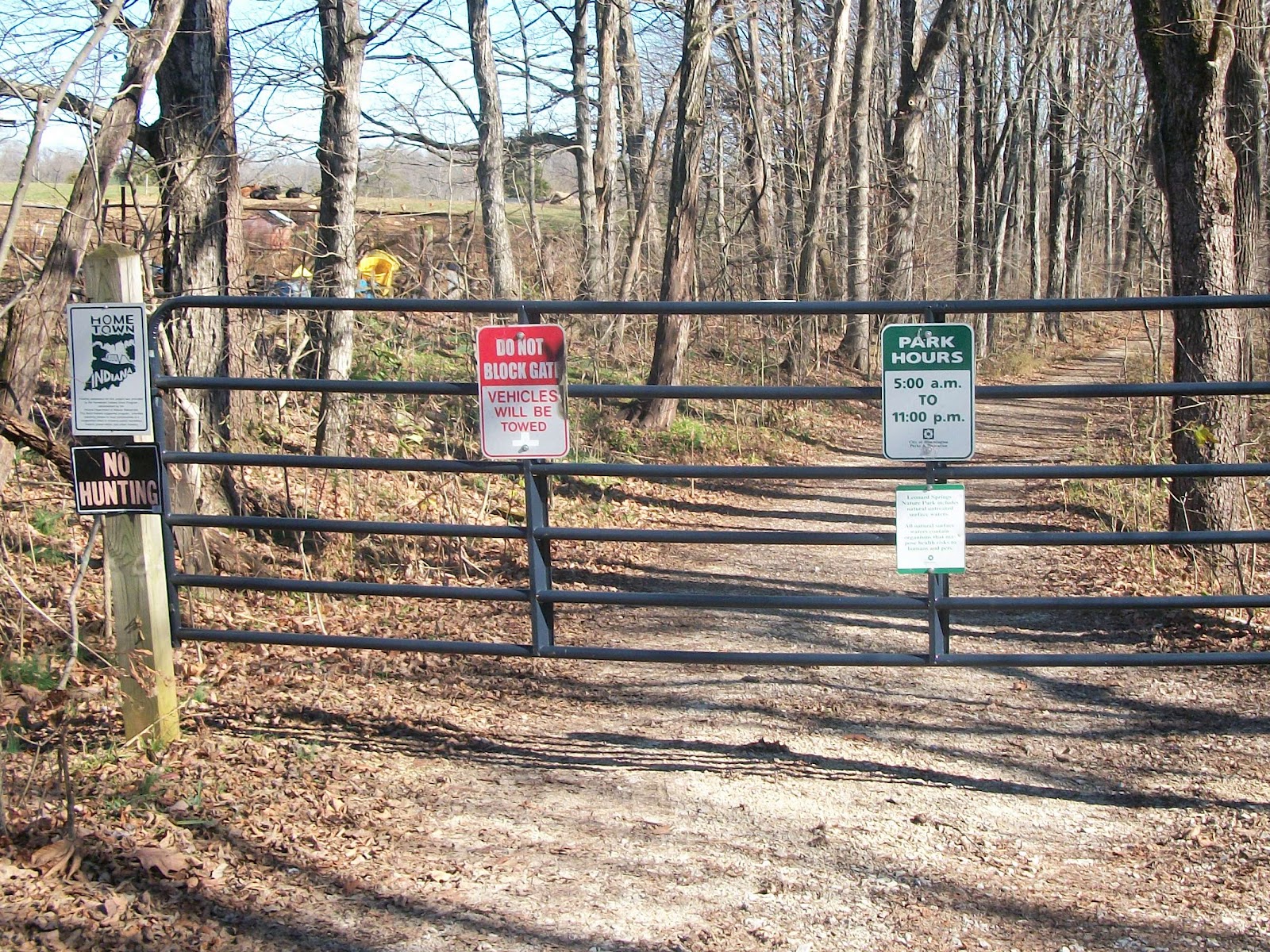
The parking lot only has room for about eight cars
so they actually recommend that you
don't go there on weekends.
As the web site warned that this was a rugged one mile hike,
I took my asthma medicine before heading out.
The property contains Leonard Springs and Shirley Springs. There are also two caves, which are closed to hikers due to the threat of
White-nose syndrome, a fungal sickness that is killing bats.
The City of Bloomington purchased the property between 1914 and 1917 in
order to build a reservoir which would store water for municipal
use. By 1943, the City was receiving water from other sources. The lake
was drained, and the property was not used. In 1998, Bloomington Parks
and Recreation purchased the property from Bloomington Utilities Service
Board. Leonard Springs Nature Preserve was dedicated on October 18,
1999.
At the top ridge of the canyon.
I will be descending one hundred feet to the bottom.
Stairs!
I do not think these are natural.
92 of these wind their way down to the springs.
Shirley Springs Shelter Cave.
You can look but you can't go in.
More steps to go.
Looking up.
Way up.
The springs.
This is just lovely.
A massive tree fell.
Looking at the bottom of the root ball of the tree.
Mushrooms and plants growing on the fallen tree.
Looking across the canyon.
A bridge across the creek.
Looking downstream.
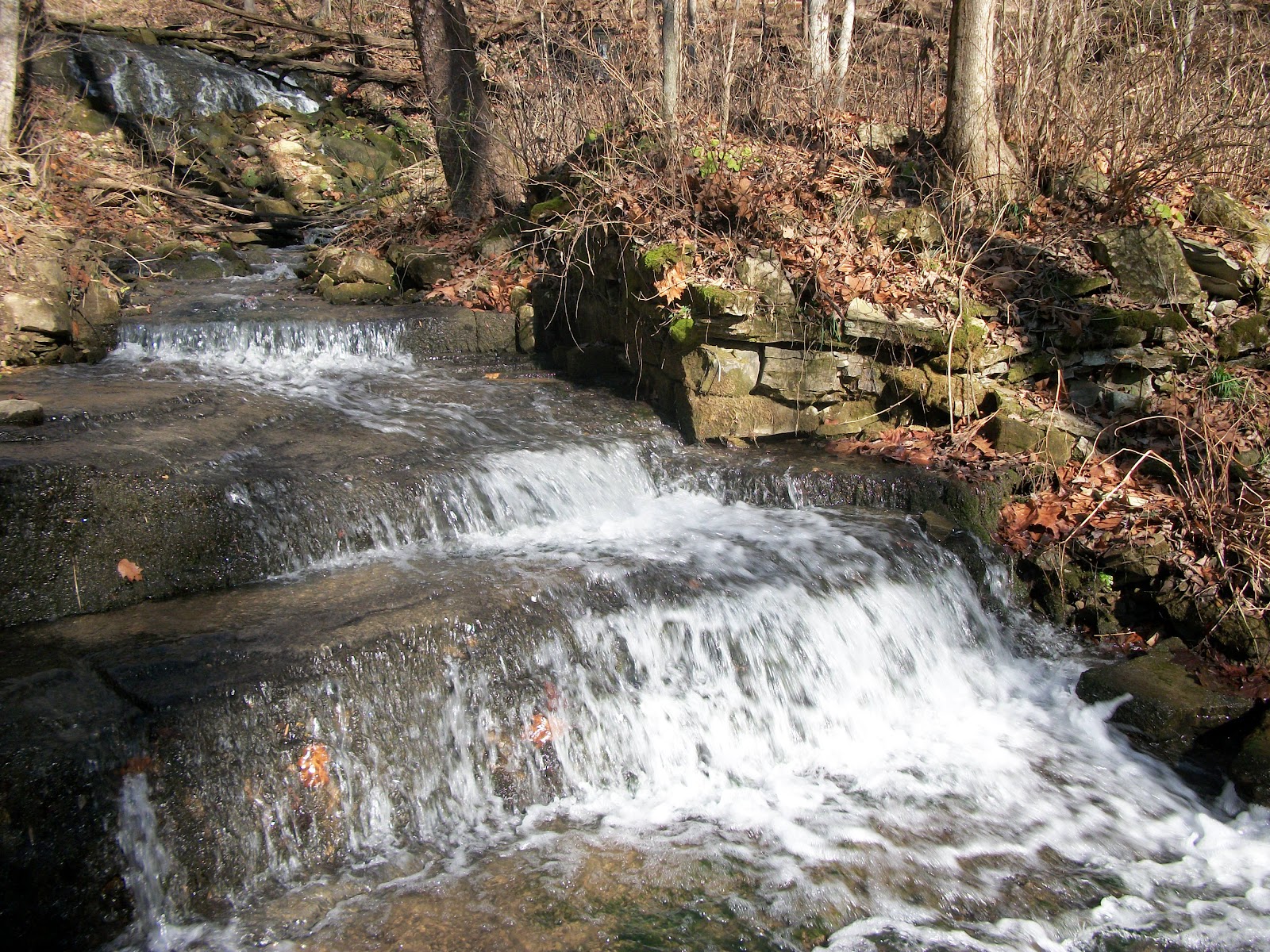
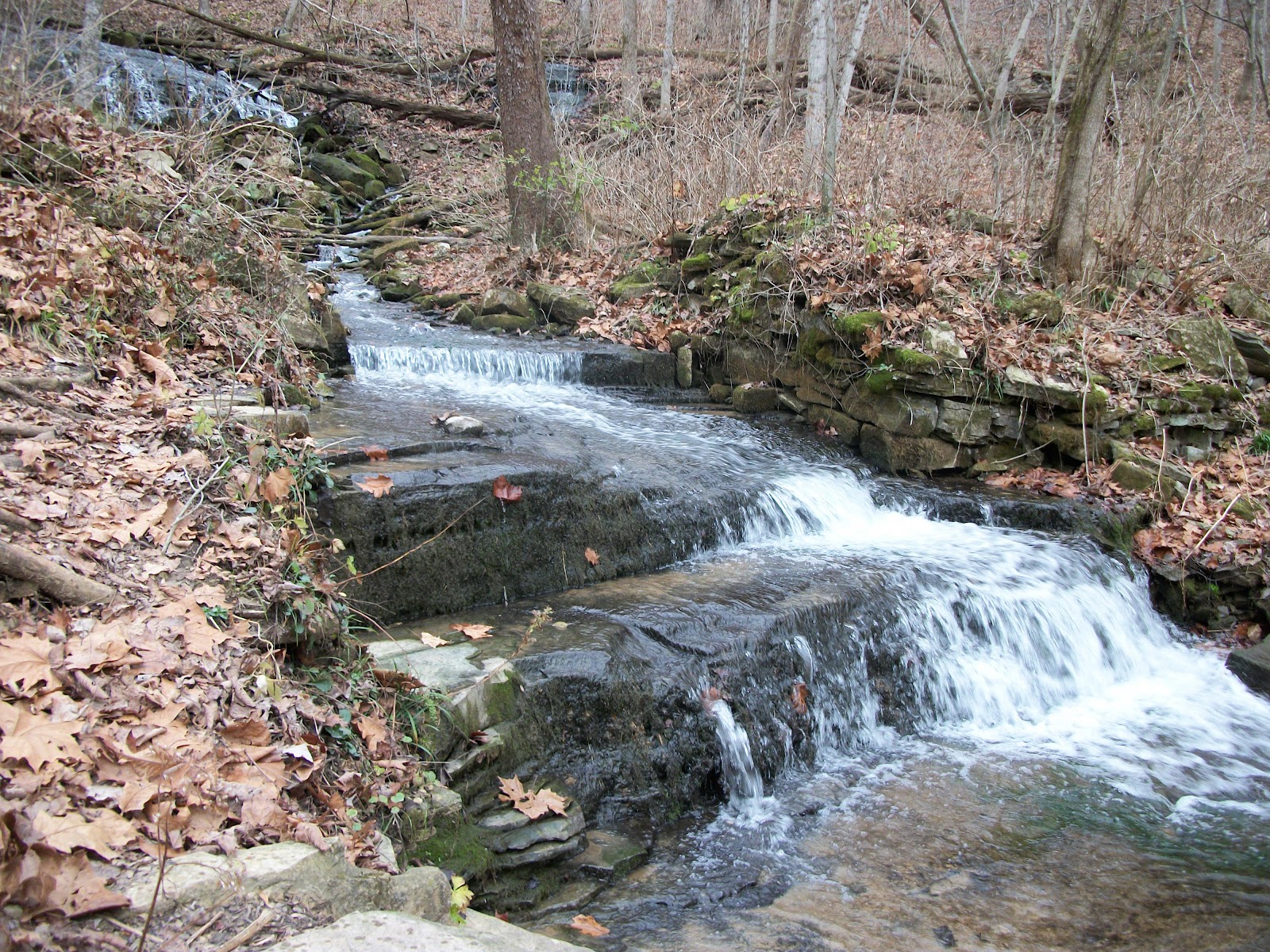
Looking upstream at the falls.
Interesting tree "sculpture".
I'd like to take this home.
The remains of the lake.
Birth of a Wetland
A reservoir once filled this valley. From 1915 to 1943, a basin was dammed as a water supply for Bloomington. Since that time, trees have returned to the slopes and a wetland has become established in an area that was formerly a muddy flat. Although altered, Leonard Springs now supports a variety of plant and animal species.
Wetland Benefits:
Keeping your water clean
Some wetland plants absorb pollutants while others provide habitat for bacteria that convert bacteria into a safer form
Stopping floods
After a rain, water from the surrounding area drains into Leonard Springs. Like a sponge, excess water is held and slowly released. In this way, wetlands prevent downstream flooding.
Wetlands and wildlife
Wetlands provide habitat for wildlife. Migratory waterfowl, beaver and frogs are dependent on wetlands.
Wetlands aren't wastelands
Wetlands are a valuable ecosystem. Wetland plants act like a sponge, soaking up floodwaters, pollutants and silt. Water leaves wetlands cleaner than it was when it entered.
The area is allowed to remain natural.
That means that fallen and decaying trees
are left alone and not cleaned up.
Leonard Springs Reservoir: 1915 - 1943
You are standing on the remains of the Leonard Springs Dam.
Demand exceeds supply
By the late 1800s it became obvious that wells could not supply enough water to the growing city of Bloomington. From 1915 to 1943, the Leonard Springs Reservoir served this purpose.
Water and politics
Since limestone bedrock does not hold water, the Leonard Springs Reservoir was plagued by shortages. Indiana University had to ship water by train and considered moving out of Bloomington. Heated battles developed between Mayor John Harris who wanted to expand Leonard Springs, and Indiana University who wanted to move the waterworks to Griffy Creek. After years of stalling, Harris was overruled. In 1924, Griffy Reservoir was established.
The end of the reservoir
Located on impervious siltstone, Griffy holds water. Leonard Springs was maintained as a water supply until being abandoned in the 1940s. Shortly after, the dam breached during high water. The property was conveyed to the Bloomington Parks and Recreation Department from the City of Bloomington in 1998.
The view of the the wetlands from the dam.
Looking along the old dam.
Continuing along the trail.
Fossils on limestone.
I've come full circle.
And I finally found the second cave.
Years ago the two caves were connected,
but a cave-in separated the two.
Two days later
I returned with the Foodie Daughter.
I wanted more pictures of the falls.
Unfortunately, rain was threatening.
The falls as seen through a hole in the fallen tree.
Thanks to the Foodie Daughter for this inspiration.
It started to rain so we headed back to the car.
Up the hill and up 92 steps.
It was much easier to take the long way around
the other day.
I just don't know why it took me so long to discover this
hidden gem.
Now that I have found it,
I will be back.
I can't wait to explore this natural wonder
in the different seasons.